Thursday, June 16, 2016

Friday, June 10, 2016
What are key elements in successful professional development of IST for teachers?
What are key elements in successful professional development of IST for teachers?
Over the next several months, I, along with a few others, will be bringing on faculty to help teach courses part of a new master’s in health coaching. We are very focused on bringing on faculty with strong background in nutrition, coaching, practice management, and ethics. Though it is highly important faculty understand and know how to use technology, online teaching experience will not be required. I want to make sure that this does not cause a negative learning experience for students enrolling in our fully online program. To help make up for this possible lack of online teaching experience, I am developing professional development courses for new faculty.
As I work to develop these courses, I often ask myself, what are they key elements in a successful professional development for IST? What do I need to make sure is factored into these courses to increase its likelihood of success? After going through several articles and research publications, I have come to the conclusion that environment, leadership and qualified instructors, and willingness to embrace technology are key characteristics of successful professional development. This post will go over each of these characteristics and how they impact a teacher's professional development experience.

Image sourced from http://ged578.pbworks.com/w/page/25547795/Barriers%20for%20teachers%20to%20use%20technology
Environment
As I have noted in other posts, I am currently a student and Indiana University. I am working to get my master’s in Instructional Systems Technology (IST). Prior to this education, my only experience with IST was at my work, where we offer a global online program using a custom made learning management system (LMS). Content is pre-recorded, Facebook is used for discussion, and assignments are posted within the LMS. As I continued to grow professionally at work, I constantly wondered what improvements/new technologies we could use within our education. There were few on staff that had the knowledge needed to provide ideas of how to improve the technology for our program. It was not until I met my mentor and enrolled at IU that I found a wealth of information. The IU Community and my mentor created a social environment where I was able to see different approaches put to use and find research on best practices that I could apply to our program.
The environment PD courses are set up in, must allow for social engagement, where faculty can learn from one another and explore different strategies for implementing technology into the online classroom. “With the exception of perhaps the innovator himself or herself, technology adoption is innately social, influenced by peers, change agents, organizational pressure and societal norms (Rogers, 1995).” (P. 641, Straub, 2009).
As the faculty grows and training develops, the environment will become stronger and more influential for new faculty. The PD courses will focus on what has been learned from previous releases, and become more focused in the context of IHCU. As Straub notes, “Cognitive approaches must be understood in context; beliefs are influenced by environment and emotions, and emotions influence environment. Successful facilitation of adoption is most likely to occur at the intersection of cognitive, affective, and contextual factors.” (p. 644, Straub, 2009)
Leadership and Qualified Instructors
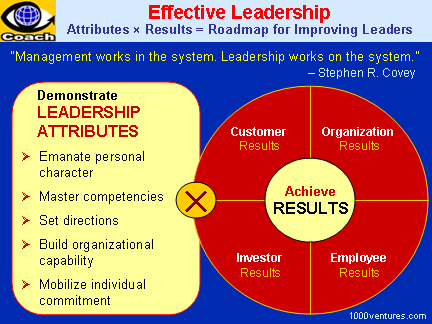
Those who develop and conduct the PD courses, must have experience in IST and online pedagogy. Not only will this improve the quality of instruction, but it will continue to develop the productive environment noted above. This environment includes leaders running the school as well as the instructors training the teachers. Both groups count as Technology Facilitators (TF), who according to Stanhope and Corn, “the TF offers support and guidance, provides PD opportunities and resources, and cultivates a climate of teaching and learning with technology by modeling technology use, advocating for technology integration, creating a shared vision among stakeholders, and reinforcing the perception that the fully integrated classroom of the future if not only desirable, but also manageable” (p. 271, Stanhope and Corn, 2014).
“According to Williamson, Redish, and ISTE (2007), in the absence of technology facilitation standards and qualified staff to implement them ‘Schools and school districts will fail to realize the potential of modern technologies for learning’ (p. 25)” (p. 271, Stanhope and Corn, 2014).
The quote above is an example of how TFs have a positive impact on the professional development experience. The courses we are working to develop will not succeed without TFs as a part of this learning community.
Willing to Embrace Technology
A consistent theme I have seen, both in research and personal experiences, is that if a teacher is not willing to try using technology in the classroom, even mandatory technology will be challenging for them to adopt. Ertmer and Ottenbreit-Leftwich put it best, “to Truly change beliefs, teachers need to feel comfortable testing new ideas, based on these beliefs, in their classrooms. To adopt technology as an innovation, teachers need to be willing to take risks, remain flexible, and be open to change” p. 275, Ertmer & Ottenbreit-Leftwich, 2010).
While working with our faculty we will need to understand their beliefs going into the training. This will allow us to alter training so that it can allow faculty to embrace technology. Ertmer and Ottenbreit-Leftwich continue to explain that “professional development initiatives that align with teacher beliefs, and that are situated within the context of their own curricular needs, are more likely to lead to teacher change” (p. 275, Ertmer & Ottenbreit-Leftwich, 2010). In addition to that, it will provide a space where they can explore and test out strategies with peers working towards the same goal. “As suggested by Zhao and Cziko (2001), observing the successful practices of others can increase teachers’ perceived need for change and increase their understandings of what new practices look like” p. 275, Ertmer & Ottenbreit-Leftwich, 2010).
Conclusion
When researching for this blog post, I came across this video which was inspiring and reminded me of the impact training teachers can have on education.
Shelley Shott: Training teachers: 10 million and counting
The consistent theme throughout these sections and in this video is community. It seems as though a collection of varied technology skills and experience, a space where ideas can be explored and shared, and that all members be willing to embrace this new era is a perfect environment for professional development. Perhaps further research should explore the most effective learning community for IST professional development.
References
Ertmer & Ottenbreit-Leftwich, 2010. Teacher technology change: How knowledge, confidence, beliefs, and culture intersect.
Stanhope, D. & Corn, J. (2014) Acquiring teacher commitment to 1:1 initiatives: The role of the technology facilitator. Journal of Research on Technology in Education, 46(3), 252-276.
Straub, E. T. (2009). Understanding technology adoption: Theory and future directions for informal learning. Review of Educational Research, 79(2), 625-649.
Friday, May 27, 2016
Live to Online Growing Pains
Prior to 2012, the school I previously worked for, a certificate health coach training program, was 100% live. Students attended sessions on the weekends for almost a year. Students had workbooks and materials they could access online, but majority of learning occurred during the weekend sessions. The school had a primary instructor who led the majority, if not all, of the weekend sessions. Each session had around 150 students and it was becoming very draining for the founder. He decided to take a risk and go entirely online. In his last live course, he recorded all of his lectures and had a small staff convert his assignments into online discussions. They decided to use moodlerooms as the LMS as well as putting all pre-recorded content in small ipods. At that time, most lectures were audio only, but some were video. Students could listen to content on the go, and then interact with classmates and instructors in the LMS. They also completed tests and submitted assignments in Moodlerooms.

From a business perspective, this was a major success. Student enrollment went from 200 students per class to now almost 2,000. Switching to online allowed students from not only all over the country, but now all over the world to enroll in the course. The founder was able to teach more people on how to become a health coach. Now, the school has over 60,000 graduates and an annual student body of 12,000 per year.
With this incredibly growth came major growing pains. The number of staff to start could not accommodate the growing volume of support needed from our students. It was quickly determined that our students were not tech savvy, therefore the volume of questions that came in multiplied to such a degree that it took days for staff to respond. Too many students were posting in the same discussion boards and barely any students were receiving feedback from either students or staff. It became all too easy for students to feel lost in the sea of students. In their end of year evaluations, students voiced that they did not feel as part of a community as past graduates expressed and they felt less confident in their coaching skills.

After a few years, staffing started to normalize. What was once a staff of 15, is now over 100. Our discussions are now on Facebook, where students easily adapt since they had prior knowledge of the platform before starting the program. It has also allowed for more productive conversation and students have reported feeling strongly supported by IIN staff. We also use Zendesk to answer student questions outside of Facebook. Student services response time is now less than 24 hours which is better than industry standards.

This experience left myself and education staff to understand what not to do for our students and learning objective. We are using these “lessons learned” to develop a much more functional LMS within the Canvas system. For example, we will be creating smaller groups to improve communication, develop better tracking of assignments, and improve feedback methods from instructors.

Saturday, May 21, 2016
What are the foundations for a positive online education experience?
What are the foundations for a positive online education experience?
Over the past five years, I have worked to improve the effectiveness and student experience for an online health coach training program. This program first started as a live, in-person, course and switched online in 2010. The school experienced incredible growth, which created a challenge in providing an intimate and personal learning experience for students. In the live program, students developed strong connections with classmates and instructors. The community, is what separated the program from its competitors. To try and keep that sense of community and engagement alive, the school has worked to apply various technologies to the program. The school continues to explore what are the appropriate learning technologies that will make the learning experience more effective and community driven.
To help apply the best practices in instructional technology, I enrolled in the IST master’s program at Indiana University. My experience thus far at IU has been incredible. However, I can’t help but notice a true disconnect between my learning experience at IU and the one we provide our students. Each school has different resources, learners, and instructors, but both should be able to provide rich learning environments.
So, I ask the question, what are the foundations for a positive online education experience? In this blog post, I will show through personal experience and research that professional development, beliefs, and ease of use are some of the keys to a strong online learning experience.
Beliefs
The transition from live to online was challenging for staff. As I mentioned earlier, most, if not all staff, had only experience in the live setting. There was a strong belief among many that this program would not be effective online. When the technology continued to advance, transitions were not as smooth, and this was partially due to staff feeling less confident about its likelihood of success. In addition, the technology added (LMS, conference calling, skype, facebook) met only minimum needs to ensure communication among group. There were few technological implementations that were used to enhance learning. Those that were implemented, suffered a short life and were abandoned before they could be developed further.
Stanhope and Corn (2014) described how a technology facilitator (FT) can have a positive impact on teachers, specific to 1:1 initiatives. Though this was not a 1:1 initiative, the research can still be applied here. Their research examined whether having a TF would enhance the commitment to 1:1 initiatives. Their study argues that schools who had a TG on staff showed a bigger commitment to this initiative. The TF allowed for consistent training for teachers, including professional development (p.268). Schools who had a TF showed a bigger commitment to the initiative and teachers felt more positive about the initiative. Perhaps, had their been a similar position on staff, more technological implementations could have been applied that enhanced learning.
For example, in my personal experience at Indiana University, I have now done a few creative projects using website design and software like Moovly. See an example here:
This learning experience left me with not only a positive learning memory, but also feeling confident speaking on the topics related to IST. When thinking of the HCTP program, there could have been an assignment to create a marketing video of their practice. The instructors could offer a range of possibilities from iMovie to Moovly and more. Students could have posted this in their groups for feedback and possibly use this in their practice in the future.
Ease of Use

To move away from moodlerooms, the school decided to make a custom LMS for the program. Top notch developers and designers were brought in to design an LMS that met the exact needs of the program. This LMS lasted exactly 18 months before the decision was made to move off of it and into Canvas. The main reason was the custom LMS suffered too many issues and became very time consuming to use. Education and Student Services spent a lot of time focusing on resolving, what should be, small issues on a regular basis, when they should have been putting that energy into developing content further for an online environment.
I was reminded of this experience when reading research done by Adunate and Nussbaum (2013). They studied the adoption of various learning technologies in the classroom. Whiteboards had the lowest adoption due to its ease of use compared to digital cameras and a reference site. Many reported wanting to abandon it at the beginning and middle of its adoption. However, as those started to understand its function and benefits, adoption increased. The difference in this research and the example above, is the technology continued to not be functional. Eventually the frustration outweighed the benefits and it decided to move on to other platforms.
I mention this example and research because I think ease of use is important. If the technology applied is challenging to use, both the instructor and student will become distracted with the main purpose, learning. Utilizing more functional technology, both students and instructors can engage with less distractions.
Professional Development
When the health coach training program (HCTP) first converted to all online, the school decided to use Moodlerooms. The staff who worked to get this set up did not have substantial experience in online education. Their primary experience was working in the field of health coaching and supporting the school when it was live. They were trained by moodlerooms to get the system setup, but there was no one on staff who had a strong background in online education.
Fast forward to a year later, results were showing major enrollment, but also a significant increase in complaints. Many students expressed not feeling supported or part of a learning group. As an example, students would post in the discussion forums, but not get a response for days. Staff relied on their experience in the live program to dictate their instructional choices and methods of support. In this example, many staff froze when deciding what to do because there was simply too many to answer. Since their approach was not altered to meet the online platform, issues continued to escalate.
Professional development, whether it be a TF or regular traininings on best practices, could have helped ease the transition from live to online. As Ertmer and Ottenbreit-Leftwich note in their 2010 article, professional development can allow for instructors to learn and appreciate technology as a way to increase learning outcomes for students (p.272). In this example, professional development could have helped them determine how to better structure discussions, create more peer-review, or come up with new methods to address the lesson at hand.
At the beginning of the Ertmer and Ottenbreit-Leftwich (2010) article, they note how many professions (mechanics, doctors, etc) require substantial knowledge and implementation of technology specific to their field. Examples they gave were doctors using various technology tools such as 2-D, 3-D, and 4-D image scans to ensure the safety of a growing fetus (p.255). This practice is expected and if that knowledge were not there, a patient could worry about the doctor's abilities. Online education is on the rise and it is essential that instructors have the training and understanding of how to teach effective online courses.


Final Thoughts and Future Research
Much of this reflection had a lot to do with the instructor/institution approach to setting up an online course. Both the instructor and institution are making the preliminary decisions on program objectives, course layout, and requirements. As these are essential to a program, it is important these individual have the proper training, confidence, and understanding in instructional technology. It is also crucial it be understood that this knowledge is not a one-time experience, but in fact part of regular growth and discussion.
I also think the student perspective is equally important. Much ICT pedagogy is student-centered, and therefore their experience and participation plays an equal role in the success of a program. In a future post, I would like to explore the essential behaviors and skills needed from a student to conduct a positive online course.
References
Aldunate, R., & Nussbaum, M. (2013), Teacher adoption of technology. Computers in Human Behavior, 29(2013), 519–524.
Ertmer & Ottenbreit-Leftwich, 2010. Teacher technology change: How knowledge, confidence, beliefs, and culture intersect.
Stanhope, D. & Corn, J. (2014) Acquiring teacher commitment to 1:1 initiatives: The role of the technology facilitator. Journal of Research on Technology in Education, 46(3), 252-276.
Subscribe to:
Posts (Atom)