Thursday, June 16, 2016

Friday, June 10, 2016
What are key elements in successful professional development of IST for teachers?
What are key elements in successful professional development of IST for teachers?
Over the next several months, I, along with a few others, will be bringing on faculty to help teach courses part of a new master’s in health coaching. We are very focused on bringing on faculty with strong background in nutrition, coaching, practice management, and ethics. Though it is highly important faculty understand and know how to use technology, online teaching experience will not be required. I want to make sure that this does not cause a negative learning experience for students enrolling in our fully online program. To help make up for this possible lack of online teaching experience, I am developing professional development courses for new faculty.
As I work to develop these courses, I often ask myself, what are they key elements in a successful professional development for IST? What do I need to make sure is factored into these courses to increase its likelihood of success? After going through several articles and research publications, I have come to the conclusion that environment, leadership and qualified instructors, and willingness to embrace technology are key characteristics of successful professional development. This post will go over each of these characteristics and how they impact a teacher's professional development experience.

Image sourced from http://ged578.pbworks.com/w/page/25547795/Barriers%20for%20teachers%20to%20use%20technology
Environment
As I have noted in other posts, I am currently a student and Indiana University. I am working to get my master’s in Instructional Systems Technology (IST). Prior to this education, my only experience with IST was at my work, where we offer a global online program using a custom made learning management system (LMS). Content is pre-recorded, Facebook is used for discussion, and assignments are posted within the LMS. As I continued to grow professionally at work, I constantly wondered what improvements/new technologies we could use within our education. There were few on staff that had the knowledge needed to provide ideas of how to improve the technology for our program. It was not until I met my mentor and enrolled at IU that I found a wealth of information. The IU Community and my mentor created a social environment where I was able to see different approaches put to use and find research on best practices that I could apply to our program.
The environment PD courses are set up in, must allow for social engagement, where faculty can learn from one another and explore different strategies for implementing technology into the online classroom. “With the exception of perhaps the innovator himself or herself, technology adoption is innately social, influenced by peers, change agents, organizational pressure and societal norms (Rogers, 1995).” (P. 641, Straub, 2009).
As the faculty grows and training develops, the environment will become stronger and more influential for new faculty. The PD courses will focus on what has been learned from previous releases, and become more focused in the context of IHCU. As Straub notes, “Cognitive approaches must be understood in context; beliefs are influenced by environment and emotions, and emotions influence environment. Successful facilitation of adoption is most likely to occur at the intersection of cognitive, affective, and contextual factors.” (p. 644, Straub, 2009)
Leadership and Qualified Instructors
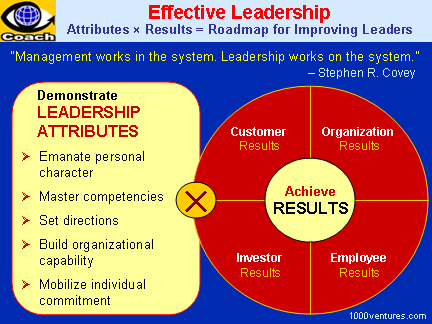
Those who develop and conduct the PD courses, must have experience in IST and online pedagogy. Not only will this improve the quality of instruction, but it will continue to develop the productive environment noted above. This environment includes leaders running the school as well as the instructors training the teachers. Both groups count as Technology Facilitators (TF), who according to Stanhope and Corn, “the TF offers support and guidance, provides PD opportunities and resources, and cultivates a climate of teaching and learning with technology by modeling technology use, advocating for technology integration, creating a shared vision among stakeholders, and reinforcing the perception that the fully integrated classroom of the future if not only desirable, but also manageable” (p. 271, Stanhope and Corn, 2014).
“According to Williamson, Redish, and ISTE (2007), in the absence of technology facilitation standards and qualified staff to implement them ‘Schools and school districts will fail to realize the potential of modern technologies for learning’ (p. 25)” (p. 271, Stanhope and Corn, 2014).
The quote above is an example of how TFs have a positive impact on the professional development experience. The courses we are working to develop will not succeed without TFs as a part of this learning community.
Willing to Embrace Technology
A consistent theme I have seen, both in research and personal experiences, is that if a teacher is not willing to try using technology in the classroom, even mandatory technology will be challenging for them to adopt. Ertmer and Ottenbreit-Leftwich put it best, “to Truly change beliefs, teachers need to feel comfortable testing new ideas, based on these beliefs, in their classrooms. To adopt technology as an innovation, teachers need to be willing to take risks, remain flexible, and be open to change” p. 275, Ertmer & Ottenbreit-Leftwich, 2010).
While working with our faculty we will need to understand their beliefs going into the training. This will allow us to alter training so that it can allow faculty to embrace technology. Ertmer and Ottenbreit-Leftwich continue to explain that “professional development initiatives that align with teacher beliefs, and that are situated within the context of their own curricular needs, are more likely to lead to teacher change” (p. 275, Ertmer & Ottenbreit-Leftwich, 2010). In addition to that, it will provide a space where they can explore and test out strategies with peers working towards the same goal. “As suggested by Zhao and Cziko (2001), observing the successful practices of others can increase teachers’ perceived need for change and increase their understandings of what new practices look like” p. 275, Ertmer & Ottenbreit-Leftwich, 2010).
Conclusion
When researching for this blog post, I came across this video which was inspiring and reminded me of the impact training teachers can have on education.
Shelley Shott: Training teachers: 10 million and counting
The consistent theme throughout these sections and in this video is community. It seems as though a collection of varied technology skills and experience, a space where ideas can be explored and shared, and that all members be willing to embrace this new era is a perfect environment for professional development. Perhaps further research should explore the most effective learning community for IST professional development.
References
Ertmer & Ottenbreit-Leftwich, 2010. Teacher technology change: How knowledge, confidence, beliefs, and culture intersect.
Stanhope, D. & Corn, J. (2014) Acquiring teacher commitment to 1:1 initiatives: The role of the technology facilitator. Journal of Research on Technology in Education, 46(3), 252-276.
Straub, E. T. (2009). Understanding technology adoption: Theory and future directions for informal learning. Review of Educational Research, 79(2), 625-649.
Subscribe to:
Posts (Atom)